






















Vietnam Veteran Jim Baiseri Reflects on Service, Sacrifice and a Lifetime of Lessons
At 17 years old, Jim Baiseri was ready to see the world and ready to serve his country. “I was a gung-ho kid,” Baiseri recalled. “I wanted to join the service, and the Navy was my way to go.”
An uncle had been stationed at Pearl Harbor at the time of the Japanese attack, and military service held a special significance for the young Baiseri.
His own childhood had been unconventional. Born in Los Angeles, Baiseri spent part of his youth in Juárez, Chihuahua, Mexico, raised largely by his mother and two aunts. His mother, he remembers, was a hardworking and popular waitress with a wonderful personality. Later, after returning to the Los Angeles area, Baiseri found himself growing up around some of the gang activity affecting local neighborhoods. He readily admits that discipline was not a particularly strong part of his young life. The Navy changed that.
Finding His Place in the Navy
Baiseri had not yet completed high school when he entered the Navy, but the service allowed him to finish his education before returning to training. He embraced military life.
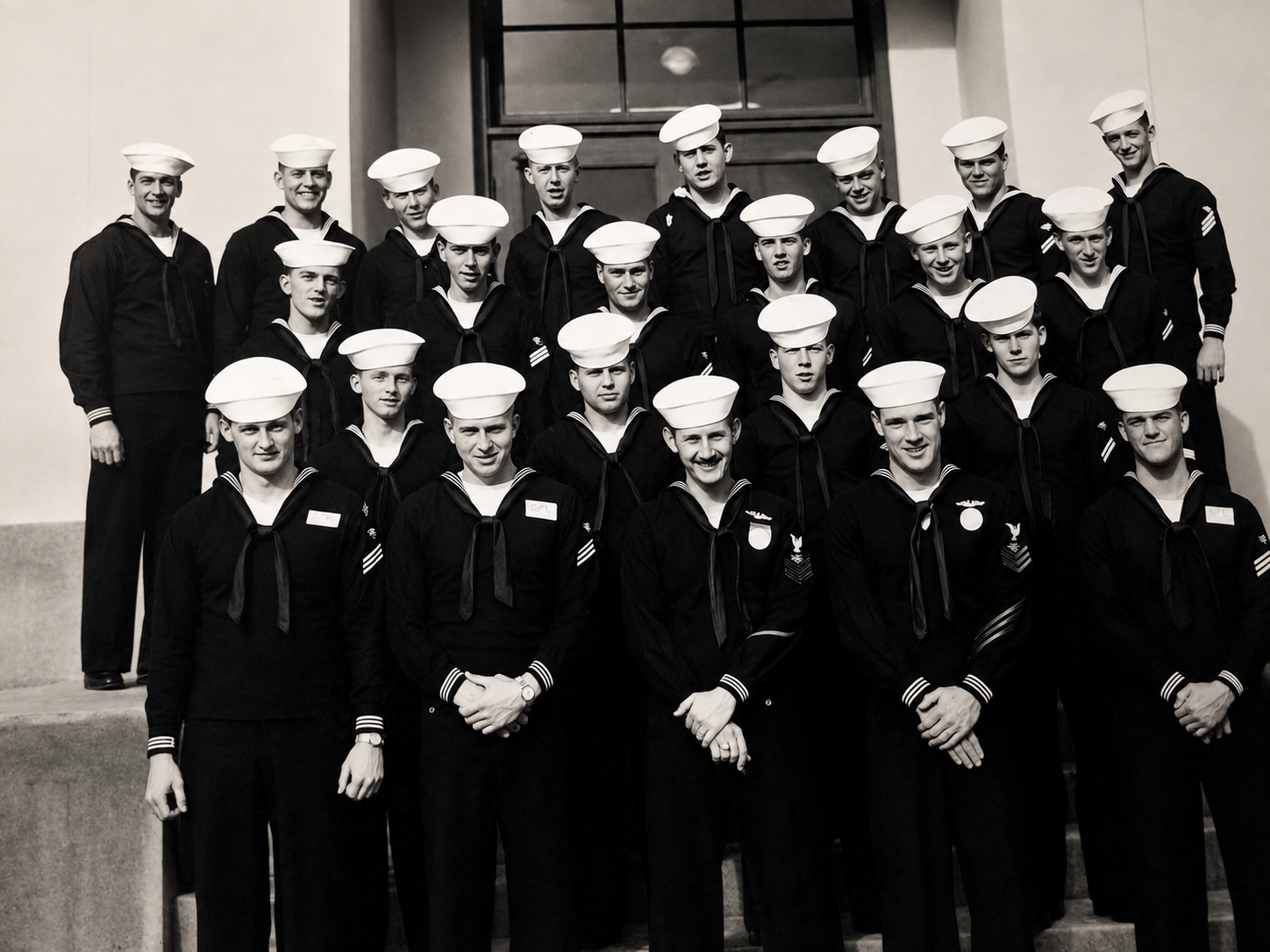
During boot camp, Baiseri distinguished himself and was selected as an honor man. He went on to communications training, spending six months learning radio communications and developing skills that would eventually take him into sensitive communications and cryptographic work.
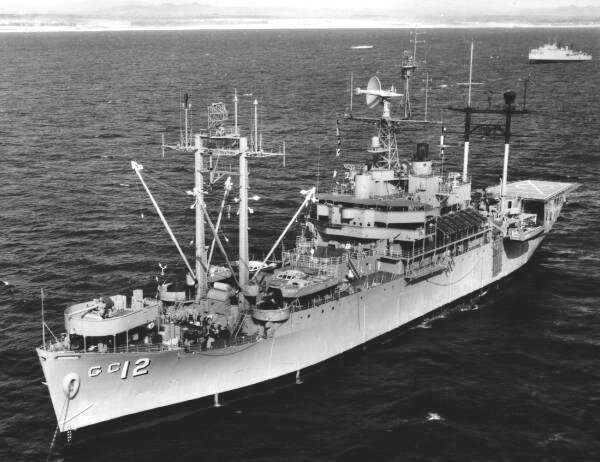
One of his early assignments took him to a military outpost in Alaska, part of America’s Cold War defense network. Baiseri recalls monitoring Soviet radio traffic for indications of a possible missile launch and working in cryptography and code writing. It was serious responsibility for a young sailor, and Baiseri continued to distinguish himself, at one point being selected as Man of the Month. His communications background eventually took him aboard the USS Estes, a Navy command ship operating in the Pacific.
Baiseri remembers the Estes as much more than simply another ship. Senior Navy leadership operated from aboard the vessel, where communications, intelligence and military strategy were part of its mission. He also recalls that part of the Estes’ responsibility involved protecting and supporting intelligence operations associated with the USS Pueblo, the American intelligence-gathering vessel that was later captured by North Korea. Baiseri did not serve aboard the Pueblo. His recollection instead places his own service aboard the Estes within the larger intelligence and security operations taking place in the Pacific during the Cold War.
From there, his Navy service would take him to Vietnam.
Life at Sea
Being aboard ship for extended periods was taxing, Baiseri recalled. The quarters were cramped, privacy was scarce, and sailors lived without anything resembling the instant communication available today. There were no cell phones, video calls or internet connections to home. The sailors entertained themselves. They boxed. They played cards. They organized singing competitions. Mostly, they found ways to make life aboard ship feel a little more normal.
And sometimes Baiseri found himself helping younger sailors through problems that had nothing to do with military strategy.
As a senior petty officer, one of his informal responsibilities was counseling younger sailors who had received the dreaded “Dear John” letters from girlfriends or wives back home.
Those moments became another part of military life, young men thousands of miles from home dealing with heartbreak while still being expected to carry out their duties.
Vietnam
For Baiseri, the entire Vietnam experience remains vivid. The Estes operated as a command platform, and Baiseri recalls senior Navy officers aboard the ship helping strategize and direct operations in Vietnam. While his own duties did not place him in the type of ground combat experienced by soldiers and Marines fighting inland, the danger of war was never far away.
When the ship was near Da Nang, Baiseri remembers being acutely aware that a vessel carrying senior officers and sensitive communications was considered a target. Nearby, aircraft came and went as the war continued around them. Then there were the experiences of friends who fought on the ground.
One of Baiseri’s closest friends survived being blown out of a tank more than once. Remarkably, the two remain friends today and still play golf together. The reality of Vietnam, Baiseri said, could be every bit as dramatic as the images later portrayed on movie screens and sometimes more so. For the young men serving there, the political questions being debated thousands of miles away seemed from the immediate responsibility in front of them. They had been given orders. They followed them.
Difficult Homecoming
Coming home brought a very different kind of difficulty. Vietnam divided the United States in ways few conflicts had before, and returning service members sometimes found themselves bearing the anger Americans felt toward the war itself. Baiseri remembers servicemen being warned about wearing their uniforms in public. Terms such as “baby killers” and “warmongers” were directed at military personnel. He remembers young servicemen being confronted and demeaned in airports. For sailors who had once worn their uniforms home with tremendous pride, the reception was painful.
Baiseri also remembers the complicated realities servicemen faced in Vietnam, where identifying who presented a threat was not always straightforward. Looking back, he believes the American public at home could not fully understand the situations confronting young military personnel thousands of miles away. Those serving had neither the benefit of hindsight nor the luxury of debating every decision in the moment. “We just obeyed,” he recalled. More than half a century later, the reception is very different. Today, strangers learn Baiseri is a veteran and tell him, “Thank you for your service.” Those words mean something to him. They restore some of the pride that was missing from the welcome many Vietnam-era veterans received when they first returned home.
From a Boy to a Man
Baiseri served four years on active duty and remained in the Navy Reserve for another 11 years. But his Navy experience did not end when he took off the uniform. “This turned me from a boy to a man,” he said. “I was raised with very little discipline. The service showed me discipline, bravery and made me who I am. Had I not gone through the Navy, who knows where I would be.” Those lessons followed him into civilian life.
After leaving active military service, Baiseri entered the insurance industry and developed expertise in risk analysis. He later moved into business consulting, helping companies better understand their financial exposure, legal responsibilities and risks, areas he found many business owners did not fully understand. His upbringing also gave him an unusual perspective.
A blond-haired, blue-eyed boy growing up for a time in a Mexican neighborhood in Juárez, Baiseri experienced what it was like to be visibly different from those around him. That experience stayed with him. Later in his professional life, he developed a particular interest in helping Hispanic business owners better understand insurance, financial exposure and the legal responsibilities associated with operating a business. In many ways, the analytical skills, responsibility and discipline developed during his Navy years became part of his civilian career.
More Than One Day a Year
More than half a century later, Baiseri’s feelings about his military service remain remarkably straightforward. “The Navy gave me my life,” he said. And when asked what he would like people to remember about veterans, beyond ceremonies, flags and a single day on the calendar, his answer returned to the idea that motivated that 17-year-old boy to enlist.
“I would say veterans are true patriots,” Baiseri said. “If you meet a veteran, they are a true patriot. We love our country at any age, and we would be willing to protect it.”
For Baiseri, honoring veterans therefore means more than remembering something that happened long ago. It means recognizing the men and women who stepped forward when their country asked them to serve and understanding that, for many of them, the lessons, friendships and loyalties formed during those years never really leave. Jim Baiseri entered the Navy as a self-described “gung-ho kid.” He came home carrying something much more enduring.
“The Navy,” he said, “made me who I am.”
By Jim Baiseri