
























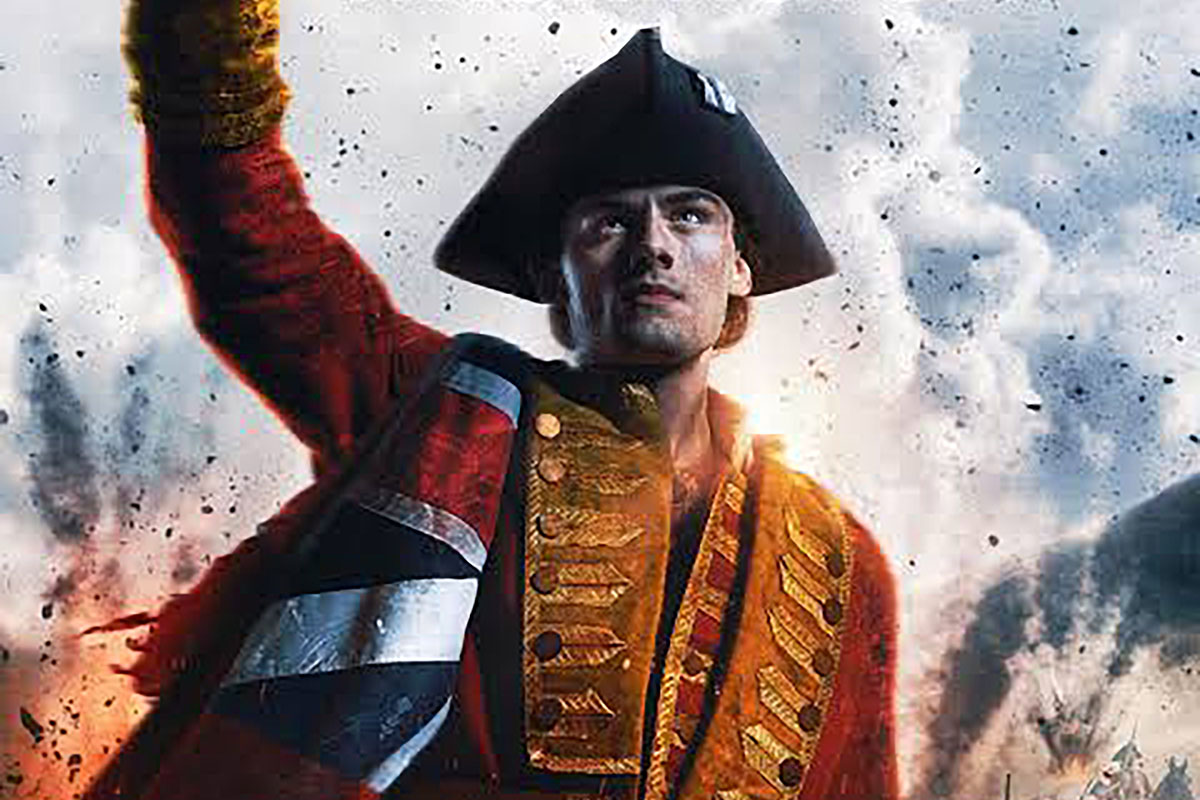
As America celebrates its 250th anniversary, audiences are being treated to a renewed interest in the men and women who shaped our nation’s beginnings. One of the most anticipated films of the year, Young Washington, arrives at just the right time. Not as another retelling of the Revolutionary War, but as a look at the young man who would one day become the Father of His Country.
Produced by Angel Studios, the film explores George Washington long before the iconic portraits, the presidency, or the crossing of the Delaware. Instead, we meet an ambitious, often impulsive young officer determined to prove himself during the French and Indian War.
That, perhaps, is the film’s greatest strength.
Rather than presenting Washington as a flawless hero, Young Washington allows us to witness his mistakes, his frustrations, and the difficult lessons that would ultimately shape one of history’s greatest leaders.
Part of what makes this film stand out is the studio behind it. Angel Studios has quietly established itself as a company committed to stories centered on courage, sacrifice, faith, hope, family, and personal conviction. While many of its productions have faith-based themes, the studio’s broader mission is to tell stories that inspire rather than divide. Personally, I find that refreshing.
I’m weary of Hollywood’s obsession with wokeness. Whether readers agree with me or not, Young Washington succeeds because it allows history to unfold on its own terms instead of forcing it to serve a contemporary agenda. Rather than rewriting history to fit today’s cultural conversations, it invites us to understand the people who actually lived it. That alone makes the film worth watching.
Many Americans first encounter George Washington as the commanding general of the Continental Army or as the nation’s first president. Few realize that decades earlier he was a young Virginia officer struggling to earn respect among Britain’s professional military establishment. The film follows Washington during the French and Indian War, a conflict that would ultimately reshape North America and prepare him for the far greater challenges that lay ahead.
History tells us that Washington’s early military career was anything but smooth. He experienced defeat at Fort Necessity. He struggled to earn the respect of British officers.
He witnessed the disastrous defeat of General Edward Braddock, during which many senior officers were killed or wounded. Washington’s calm leadership during that chaotic retreat earned him widespread admiration, but it wasn’t because success came easily. Opportunity arrived only after extraordinary hardship. The film captures that reality remarkably well.
Like every historical drama, Young Washington condenses events and creates dialogue where history leaves gaps. Yet the filmmakers remain surprisingly faithful to the broad historical record. Washington really was a young officer in his early twenties. He truly served under General Braddock during the ill-fated expedition toward Fort Duquesne. During the battle, two horses were shot from beneath him, and four bullets pierced his coat without causing injury.
His courage under fire became legendary. The screenplay takes understandable liberties with conversations and timelines, but it never loses sight of the larger truth: Washington was not born a legend. He became one through perseverance, humility, and experience.
William Franklyn-Miller delivers an engaging performance as the young Washington. Rather than portraying him as larger than life, he presents a young man wrestling with doubt, pride, ambition, and responsibility. It is a performance filled with humanity, making Washington approachable rather than untouchable. The supporting cast, impressive battle sequences, period costumes, and beautiful cinematography all contribute to an immersive experience that feels authentic without becoming overly sentimental.
Reviews have been largely positive. Many critics have praised the film’s production values, battle scenes, historical atmosphere, and willingness to portray Washington as an imperfect young man rather than an idealized icon. Others have criticized portions of the dialogue as overly inspirational or suggested that some historical complexities receive less attention than they deserve. Those observations are fair. No two-hour film can capture every nuance of eighteenth-century history. But that was never this movie’s mission. Its goal is to introduce audiences to the character of George Washington, not merely the accomplishments listed in history books. In that regard, it succeeds.
One line from the film remained with me long after the credits rolled: “Even a pawn can remove a king.” It’s a simple sentence, but it speaks volumes. Washington began as a relatively unknown colonial officer serving an empire that often viewed Americans as second-class soldiers. Few could have imagined that the same young man would one day command the army that secured American independence. His journey reminds us that greatness rarely appears overnight. It grows through disappointment. It matures through failure. It is refined through perseverance. Perhaps that’s why Young Washington resonates so strongly during America’s 250th anniversary. It reminds us that history isn’t made by perfect people. It’s made by ordinary individuals willing to learn, adapt, and continue moving forward despite setbacks.
Young Washington is more than a historical drama. It is a story about leadership, resilience, humility, and the long road toward greatness. Whether you’re a student of history, a fan of the American Revolution, or simply someone who appreciates well-told stories, this film deserves your attention.