























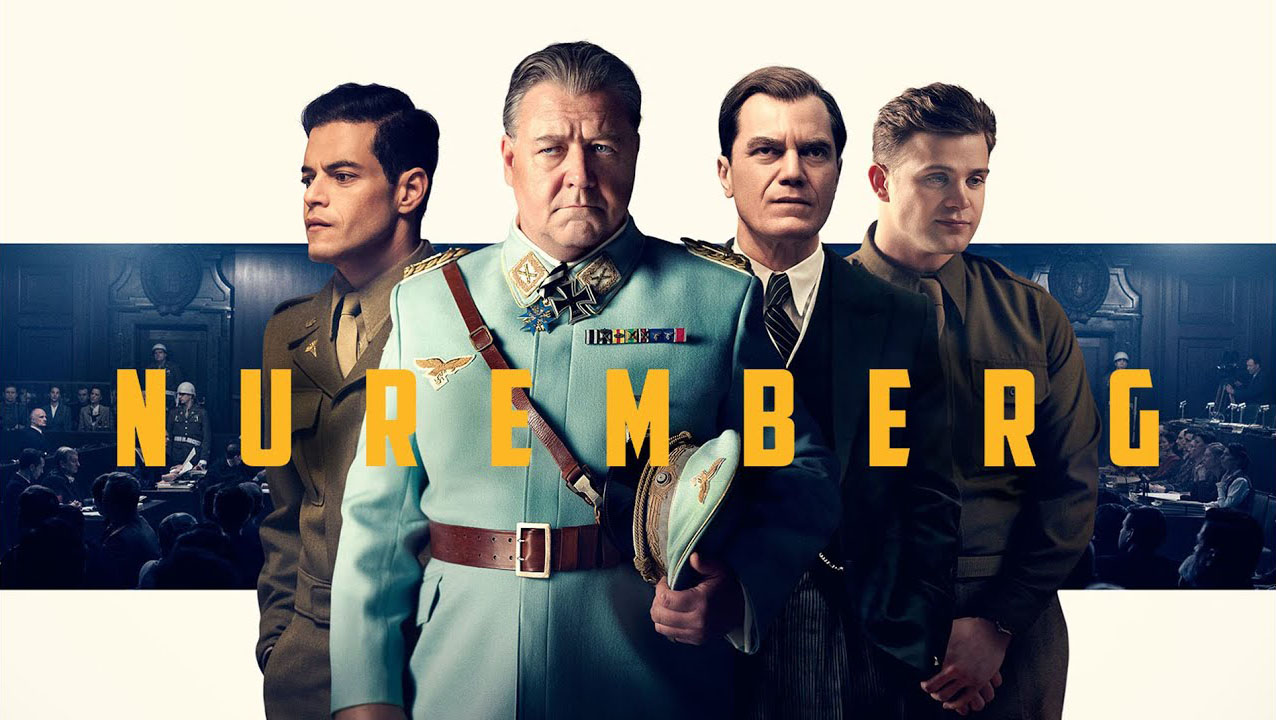
I found myself watching Nuremberg [2025], not as entertainment but rather as reflection. What the film revisits is one of the most defining moments in modern history – the Nuremberg Trials. Where the world attempted to confront the aftermath of unimaginable atrocity. But the question at the center of it all still lingers: How does a society move from order… to moral collapse?
The answer is not found in extremes. It is found in increments. The individuals examined in Nuremberg were not, at first glance, the monster’s history would later define them as. They were officials, professionals, participants in a system that gradually redefined what was acceptable, until the unacceptable became normalized.
And that is the part that should give us pause today. Because what Nuremberg revealed was not just guilt, it revealed process:
- The power of propaganda
- The danger of blind allegiance
- The quiet drift from truth into narrative
History shows us that dehumanization is rarely sudden. It begins with language. With labels. With the steady repetition of ideas that reduce people into categories rather than individuals.
We are living in a time where political division is no longer just disagreement, it is, at times, hostility. There is rising anger, sharper rhetoric, and a growing willingness to assign the worst possible labels to those we oppose.
Words like “Nazi” carry immense historical weight. They are not casual descriptors. They are tied to a regime responsible for some of the darkest acts in human history. When such terms are used loosely, without understanding or restraint, something important is lost, clarity. And when clarity is lost, so is accountability.
We are also seeing moments where rhetoric spills into real-world consequences where tension escalates beyond words. That should concern all of us, regardless of political alignment. Violence, in any form, is not a solution. It is a signal that something deeper has broken.
The lesson of Nuremberg is not about assigning modern comparisons carelessly. It is about recognizing the conditions that allow societies to drift -slowly and quietly away from shared truth and toward division.
Justice, as history shows us, is not just about punishment. It is about confronting reality; fully, honestly, and without distortion. That requires discipline. It requires restraint. And above all, it requires a commitment to truth over narrative.
As philosopher R. G. Collingwood once wrote: “The only clue to what a man can do is what a man has done.” History leaves us with evidence. What we do with that evidence… is up to us.
Because the most dangerous moment is not when history repeats itself. It is when it is misunderstood.