

























Diabetes affects millions of Americans and remains one of the most common chronic health conditions in the United States. While many people have heard the term, fewer understand exactly what diabetes is, or how important early detection and proper management can be.
According to Dr. Amber Lin, a family medicine physician with PIH Health, diabetes develops when the body has trouble producing or using insulin. Insulin is a hormone made by the pancreas that allows glucose (blood sugar) to enter the body’s cells, where it is used for energy.
“When insulin isn’t working properly, too much sugar stays in the bloodstream,” Dr. Lin explains. “Over time, high blood sugar can lead to serious, potentially life-threatening health problems. That’s why checking blood sugar levels each year is so important.”
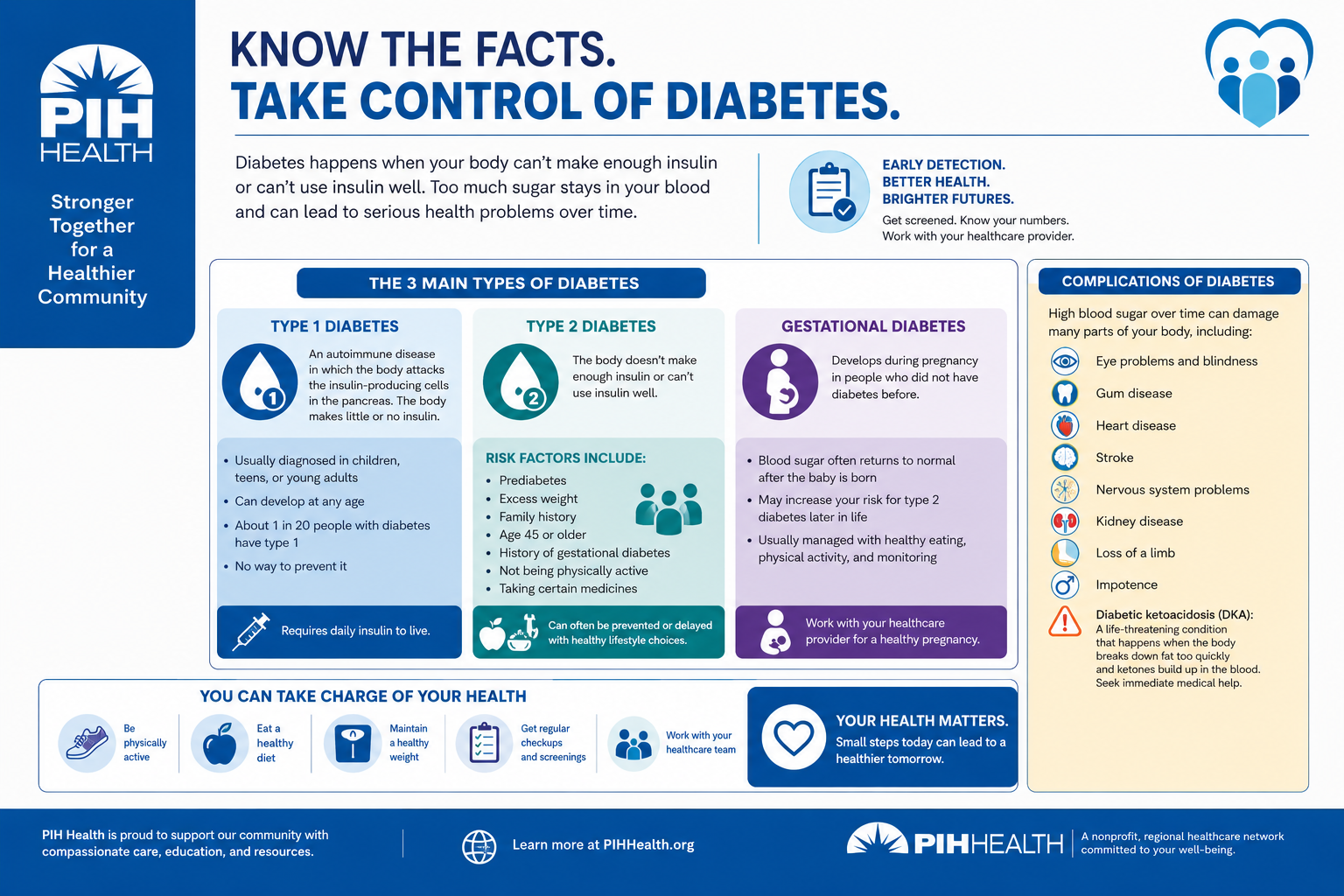
Type 1 diabetes is an autoimmune disease in which the body’s immune system mistakenly attacks the insulin-producing cells in the pancreas. As a result, the body produces little or no insulin, making daily insulin therapy essential for survival. Although it is most often diagnosed during childhood or early adulthood, Type 1 diabetes can develop at any age. Family history can increase the risk, but there is currently no known way to prevent the disease.
Type 2 diabetes is by far the most common form of diabetes. It occurs when the body either doesn’t produce enough insulin or becomes resistant to its effects. Several factors can increase the risk of developing Type 2 diabetes, including:
- Prediabetes
- Being overweight
- Family history
- Age 45 or older
- A history of gestational diabetes
- Physical inactivity
- Certain medications
Some racial and ethnic groups, including African Americans, Hispanic Americans, American Indians, Alaska Natives, Pacific Islanders, and Asian Americans may face a higher risk. The encouraging news is that many cases of Type 2 diabetes can be delayed or even prevented through regular exercise, healthy eating habits, maintaining a healthy weight, and working with a healthcare provider to monitor blood sugar levels.
Gestational diabetes develops during pregnancy in women who did not previously have diabetes. It occurs because the body cannot use insulin efficiently during pregnancy. For many women, blood sugar returns to normal after childbirth. However, having gestational diabetes increases the likelihood of developing Type 2 diabetes later in life. Healthy eating, regular physical activity, appropriate weight gain during pregnancy, and careful medical monitoring often help manage gestational diabetes. Some women may also require medication or insulin.
While gestational diabetes often resolves after pregnancy, Type 1 and Type 2 diabetes are lifelong conditions that require ongoing management.
Without proper control, high blood sugar can damage nearly every organ system in the body and lead to serious complications, including:
- Vision loss and blindness
- Gum disease
- Heart disease
- Stroke
- Kidney disease
- Nerve damage
- Loss of limbs due to poor circulation
- Sexual dysfunction
- Diabetic ketoacidosis, a medical emergency that occurs when the body breaks down fat too rapidly, causing dangerous levels of ketones to build up in the bloodstream
Many people live with diabetes, or prediabetes, without realizing it. Because symptoms can develop gradually, routine medical checkups and blood sugar screenings are essential, especially for adults over age 45 or anyone with additional risk factors.
A healthy lifestyle cannot prevent every type of diabetes, but it remains one of the most powerful tools for reducing the risk of Type 2 diabetes and improving overall health.
If you have concerns about your risk, speak with your healthcare provider. Early diagnosis and treatment can help prevent complications and allow people with diabetes to live long, healthy, and active lives.
Your health is worth the investment. Understanding diabetes today may help protect your tomorrow.
By PIH Health