





Long before the walls of the La Mirada Theatre for the Performing Arts were adorned with award-winning paintings and sculptures, a group of determined residents set out to answer an important question: What kind of city would La Mirada become?
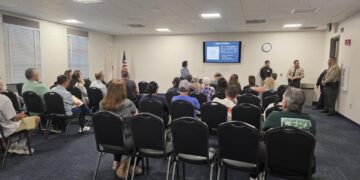
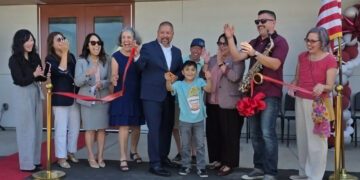
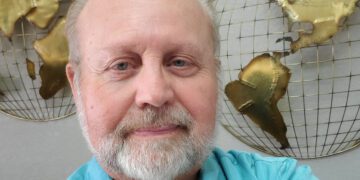
Last month, residents received a glimpse into that answer during a special preview presentation highlighting the city’s remarkable public art collection and the upcoming Art Tours program planned for the La Mirada Theatre. The evening’s keynote speaker was Cathy Moses, one of the founding organizers of the famed Fiesta de Artes, whose recollections offered a fascinating look back at one of the most ambitious community arts programs in Southern California history.
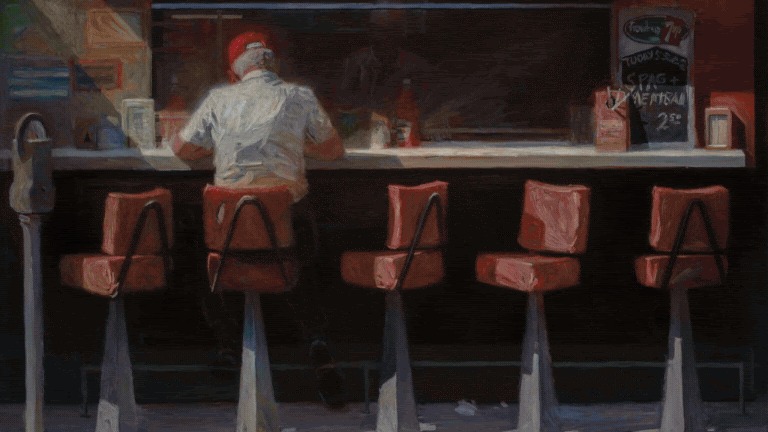
What many residents may not realize is that La Mirada today possesses one of the largest municipal art collections in California. Much of that collection exists because of a volunteer-driven arts movement that began shortly after the city incorporated in 1960.
As new neighborhoods replaced the olive groves of the old McNally Ranch, La Mirada’s first City Council recognized that building a city meant more than constructing homes and roads. They wanted to create a cultural identity. To achieve that goal, city leaders established an Arts and Culture Committee, which helped launch several organizations that would become community institutions, including the La Mirada Community Playhouse, the La Mirada Symphony, and the La Mirada Arts Colony. In 1962, those efforts culminated in the city’s first arts festival. What began as a modest exhibition quickly grew into something much larger.
By 1968, the festival had become so successful that organizers formed an independent organization to manage it. They adopted a new name ‘ Fiesta de Artes’ and embraced a colorful Mayan-inspired theme featuring giant papier-mâché masks, elaborate decorations, artist villages, live entertainment, and one of the largest art exhibitions in the region. The event became a showcase not only for established artists but also for young creators, students, and emerging talent. Paintings, sculptures, crafts, performances, concerts, and workshops transformed La Mirada into a cultural destination every spring. At its peak, hundreds of volunteers worked year-round to plan and operate the festival, which eventually expanded from a four-day event into a ten-day celebration.
After several years in temporary locations, Fiesta de Artes found its permanent home in 1977 when the newly opened La Mirada Civic Theatre invited organizers to become part of the theater’s grand opening celebration. The move proved transformative. The theater lobby provided a secure and elegant setting for exhibitions, while artist villages and entertainment venues flourished outside. The festival quickly gained a reputation for artistic excellence, attracting entries from throughout California, across the United States, and even internationally.
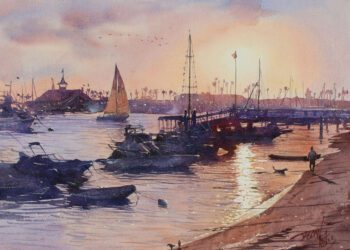
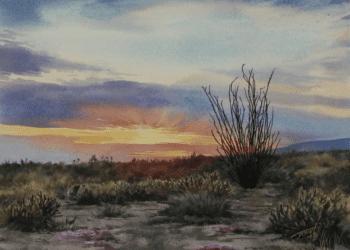
Perhaps the festival’s most enduring contribution was its Purchase Award program. Each year, the City of La Mirada purchased one of the winning works from the exhibition. Those awards grew steadily, rising from $500 in 1962 to $2,000 by 1980. Over the course of the festival’s 26-year run, the city acquired dozens of significant works of art. Today, many of those pieces remain on display throughout City Hall and the La Mirada Theatre, quietly serving as reminders of the community spirit that created them.
The theatre grounds also feature the renowned sculpture “Canto 79” by acclaimed artist Joseph Young, another lasting legacy of the festival era.
Despite its popularity and success, changing social and economic realities eventually caught up with the festival. By the mid-1980s, organizers found it increasingly difficult to recruit the large volunteer force needed to sustain the event. In 1987, after 26 years of continuous operation, the final Festival of Arts was held in La Mirada. Yet while the festival itself came to an end, its impact never disappeared.
For many residents, the paintings hanging in public buildings are simply part of the scenery. Few realize they represent decades of community investment, volunteer dedication, and artistic achievement. That is precisely why the upcoming Art Tours initiative is generating excitement.
By bringing visitors face-to-face with the city’s collection and sharing the stories behind the artwork, organizers hope to reconnect modern La Mirada with a chapter of its history that helped define the community’s character.
As Cathy Moses reminded attendees during the presentation, the Fiesta de Artes was more than an art show. It was a citywide labor of love, built by volunteers who believed culture mattered and who left behind a gift that continues to enrich La Mirada decades later.
By Cathy Moses