












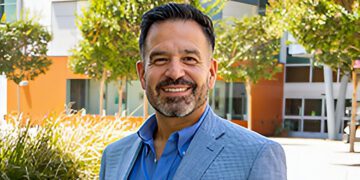






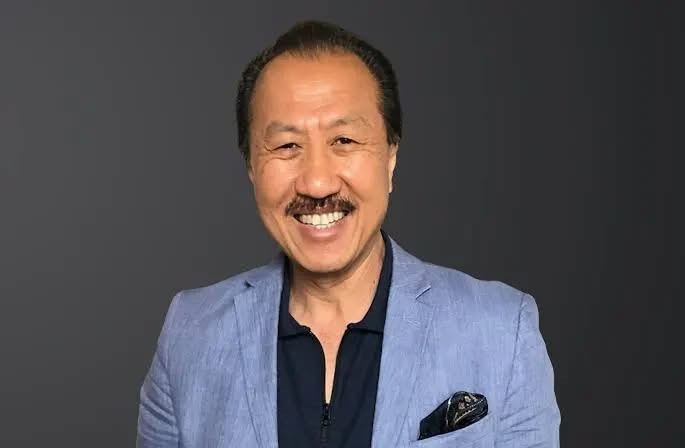
From “The Sickly Child” to Steady Leadership: The Discipline of Mayor Ed Eng
Before the discipline, before the leadership, before the strength there was a boy who was known simply as the “sick and weak” kid.
Ed Eng did not begin life with advantages. Growing up with severe asthma, his early years were marked by a relentless cycle of illness; colds that turned into fevers, a body that struggled to keep up, and an immune system that offered little defense. He was often the smallest in the room, sometimes injured and often watching from the sidelines.
He remembers being included in neighborhood games but not because he was strong, he remembers being the one that others adjusted for and he never forgot that label. But that label didn’t define him, it did however stay with him long enough to shape a decision:
“I began taking my health seriously in my mid-30s,” Eng explains. “I realized that coming into work not fully ready ‘for battle’ was not going to work.”
At the time, his responsibilities had grown from managing small teams to leading thousands during his tenure with the Los Angeles Times. The pressure was real. The expectations were higher. And the margin for weakness both physically or mentally, was gone.
So he trained. Not casually. Not occasionally. Completely.
From early training in Taekwondo to decades of discipline in Brazilian Jiu-Jitsu, Eng immersed himself in martial arts with intensity and focus. He boxed. He studied Filipino martial arts. He pushed himself into environments where failure was not just possible, but guaranteed.
“I’ve been in around a hundred fights,” he says. “And I lost most of them.” He then adds, “Loss wasn’t the end of the story. It was the lesson.” He tested himself early, even stepping into high-level challenges and losing badly. But instead of retreating, he leaned in with more training, more discipline and more refinement. Thirty years later, the result is not bravado, but certainty.
Today, Eng continues to train at UFC Gym La Mirada, but the transformation he represents goes far deeper than physical ability. Martial arts, he explains, creates something many people overlook: a regulated, steady nervous system. “It settles you,” he says. “There’s a direct connection between martial arts and leadership. They go hand in hand.”
“Strength is not about youth. It’s about continuity. It’s about balance, endurance and mental clarity. Not just how you look, but how you show up.”
As Mayor, Eng leads with the same mindset he brings into training: decisive, focused, and grounded under pressure. “I’m not a people pleaser and I don’t pretend to be.” That is a statement rooted not in ego, but in responsibility.
Leadership, he explains, is not tested when things are easy. It is forged in moments where decisions must be made quickly, often without perfect information, and sometimes without popular support. “In a fight, you have a split second to decide. Leadership is the same.”
He approaches governance with a data-driven lens, prioritizing long-term outcomes over short-term approval. “I have no problem making decisions that may not be popular,” he says. “As long as I know, in my gut, I’ve made the best decision I could.”
“Leadership is clarity under pressure.”
Eng’s story is not about reinvention. It is about continuation. From a child who struggled to breathe…to a man who trains with discipline…to a leader who stands firmly in conviction. His life reflects a deeper truth: You do not have to age into decline. You can age into strength.
Physical health. Mental clarity. Financial stability. These are not separate pursuits. They are the foundation of a life that holds. Through his work with leadership development, including contributions to the Norwalk-La Mirada Unified School District Leadership Academy, Eng reinforces a message that extends beyond titles: Strength is not only of the body, but of the mind. And just as importantly: Passion is not enough. You must understand the challenge and whether it works.
Looking back, Eng does not point to one defining moment. Instead, he points to many. “No single event defines you but together, all the pivotal moments become you.”
From illness… to discipline… to leadership, each chapter built upon the last.
There is something unmistakable about a person who did not begin strong but became strong anyway. Not for recognition. Not for approval. But because life required it.
And in that transformation, a message emerges—quiet, but undeniable: “Strength is built. And it’s never too late to begin.”